
I mentioned yesterday how much I enjoy seeing Persimmons in the fall and especially all the wildlife they attract. I’ve also mentioned how much I enjoy a good experiment of some wild idea.
Let me put the caveat here that this is just me messing around on something. You can definitely find much better information on the process elsewhere.
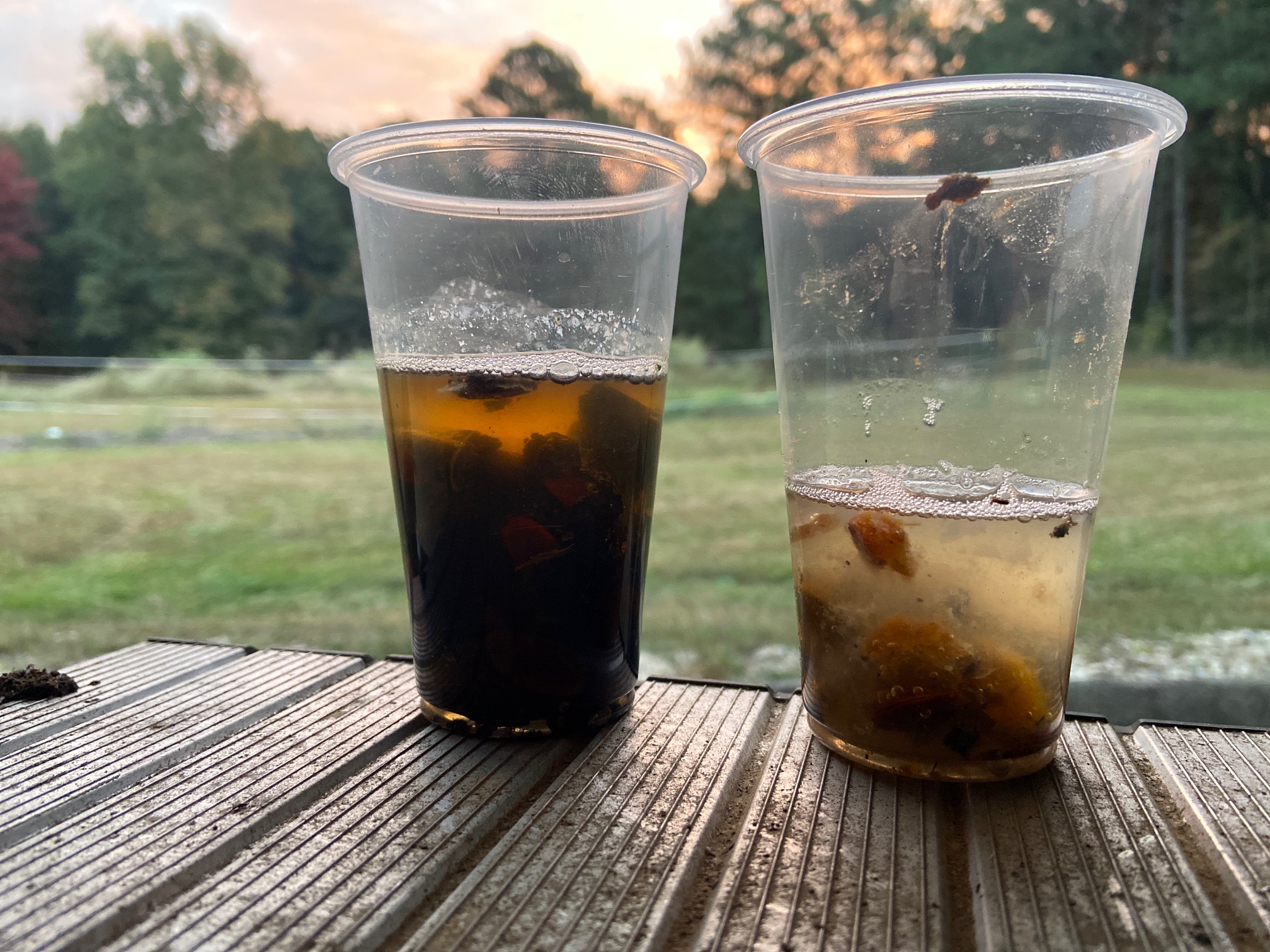
Persimmon seeds have a hard outer coating that as I’ve read will break down over time but needs the process of scarification to sprout quicker. (yeah I know, I’m nerding out here) The best way for scarification to happen is through the natural process of digestion from animals that eat the Persimmons. The stomach acid of the animal breaks down the coating then the seeds get passed through the system – yuck! This time of year you can find Persimmon seeds outside in a certain medium (yeah that one). From here (I’ll let you guess where) you can take the seeds and stratify or chill them. Of course you can manually scarify the seeds or damage the outer coating with a file or something. This is my experiment that I’ll be trying this year, I’m going to try planting seeds that have been both naturally and manually scarified. The picture below are of my too cups of seeds for this test (you can guess which is which). I’m going to let the seeds soak in water a bit to clean them up before putting them in zip lock bags to stratify in the refrigerator, sources I’ve read say the seeds need 60 days to stratify. From my past experience roots will emerge from the seeds as they chill in the refrigerator.
I’ll be sure to update on this later.
I want to say thanks for stopping by to read my ramblings. To say thanks more I have a few free phone wallpapers here.
Please do me a favor, if you enjoyed the post please share it with a friend.
Thank So Much! -Michael
 Michael A. Gilbert
Hey Michael – speaking of all things natural… One of the other two preachers I am with here in the Solomon Islands came down with a bad sore throat and lost his voice. He had no medicine, so one of the men handed him a bunch of green leaves, told him to boil them in water, then drink the water. He was hesitant for good reason. The brew tasted terrible, so he only sipped it. I texted a picture of the leaves to Pat, and she ran it on a plant identification app, and goes what? It was Prickly Ash, a plant native Americans have used for years as natural medicine for pneumonia and other ailments! Man! Who knew?I love your daily blog. And I love you my friend!Take care!Bro Larry___________________________ Larry E. Clements Cell: 870.571.8735 LarryEClements@iCloud.com
LikeLike